
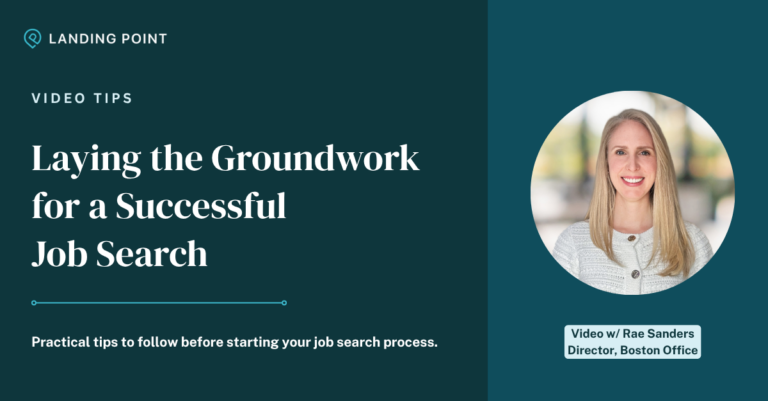
By Rae Sanders, Director, Boston Office
Starting a job search without a clear plan can lead to frustration, wasted time, and missed opportunities. One of the most important and often overlooked steps in the process is building the right foundation before you begin applying.
Recruiters and hiring managers review hundreds of resumes and profiles day to day, often making decisions in a matter of seconds. Preparation isn’t optional. It’s essential. A successful job search isn’t just about submitting applications. It’s about positioning yourself strategically from the very beginning.
In this video, Rae Sanders, Director on Landing Point’s Boston team, shares practical advice on how to lay the groundwork for a successful job search, from defining your direction to optimizing your resume and LinkedIn profile.
[Rae Sanders, Director at Landing Point, shares tips on how to prepare for a successful job search, including resume strategy and LinkedIn optimization.]
Key Steps
One of the most common mistakes candidates make at the start of a job search is jumping straight into applications without first defining the industry or type of role they’re looking for. Without that clarity, it becomes difficult to tailor your resume, position your experience, or communicate your value effectively.
Once you’ve identified a clear direction, or even a few potential paths, your resume becomes your most important tool. A strong resume isn’t just a list of responsibilities. It’s a targeted document that speaks directly to the role you want. This means leading with a compelling professional summary and structuring your experience so the most relevant information appears first.
It’s also important to consider your audience. In many cases, recruiters are the first to review your resume. If your most relevant experience isn’t immediately visible, it could be overlooked. Structuring your resume with intention ensures your strongest qualifications stand out right away.
Your LinkedIn profile plays an equally critical role and is often a recruiter’s first point of reference. A built-out profile, with aligned dates, titles, and responsibilities, reinforces credibility and improves discoverability in searches. Adding detailed bullet points and a professional photo further strengthens your overall presentation.
For candidates who are unsure about their next move, working with a recruiter can provide valuable clarity. Recruiters who specialize in your field can offer insights into market trends, career paths, and opportunities you may not have otherwise considered.
Ultimately, a successful job search begins well before the first application. The more intentional you are upfront, the more effective and efficient your search will be.
Looking Ahead
If you’re starting a job search and want guidance on positioning yourself for success, Landing Point is here to help. Our recruiters work closely with candidates to define career direction, refine resumes, and connect them with the right opportunities.
Reach out to our team to start your job search with a clear strategy and a strong foundation.
Transcript
Rae Sanders:
The number one tip I have for people who are just getting their job search going is to really take some time and think about the direction they want to take, because everything else that you do to get yourself ready for job searching depends on this.
Once you’ve identified a path or two that you want to travel down, the first thing you get going is the resume.
That resume needs to be highly targeted toward the roles you’re seeking. Right at the top of the resume, include a professional summary that shows the hiring manager exactly why they should hire you. The bullets underneath each of your roles should be in order of relevance to the position.
You’ve got to keep in mind that the first people who look at your resume before it gets to the hiring manager are recruiters. So it’s important that the most relevant information is right at the top half of the page.
Once the resume is set, the LinkedIn profile comes next. It needs to match your resume in terms of dates, titles, and responsibilities. You should include bullets, since recruiters are often using LinkedIn for sourcing.
Make sure you have a professional photo and feel free to make it a bit personal. A complete LinkedIn profile is often the first thing recruiters see before your resume.
If you’re unsure about the direction you want to take, find a recruiter in your field. They can be a great resource when you’re trying to figure out your next step.
About Rae Sanders:
Rae Sanders is a Director on Landing Point’s Boston team and a long-time leader in the Greater Boston recruiting market. She specializes in direct hire and temporary placements across Accounting & Finance and HR & Talent Acquisition, partnering with professionals across a wide range of industries. With more than 15 years of recruiting experience in the region, Rae works with job seekers to understand their goals and connect them with opportunities aligned to their desired career path.
Notable searches include placements within corporate accounting, investment operations, and capital markets, ranging in experience from entry-level to senior management. Before joining Landing Point, Rae spent 14 years at a Boston-based recruiting firm, where she focused on accounting and finance recruitment. Outside of work, she enjoys spending time with her two children and two dogs, going to the beach, cooking, and exploring the outdoors.